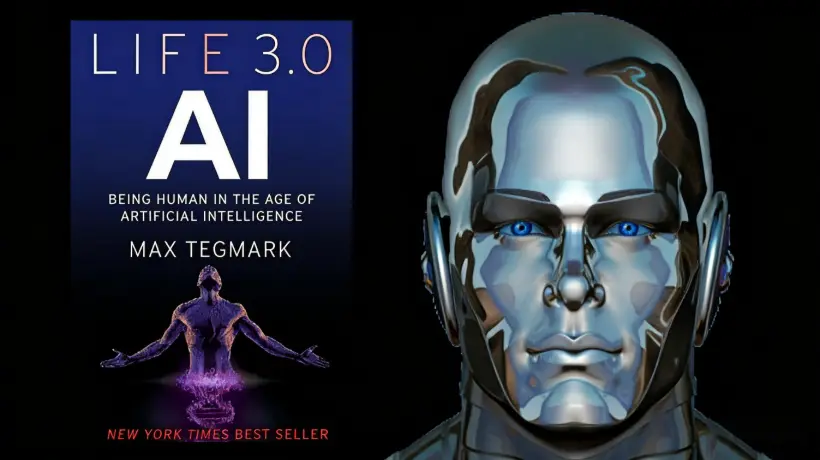
Life 3.0, written by MIT physicist Max Tegmark, explores the ultimate future of artificial intelligence from an interdisciplinary perspective. Lauded by renowned experts such as Stephen Hawking and Elon Musk, it has become a landmark work in the field of AI literacy.
Core Framework: Three Stages of Life Evolution
Tegmark proposes a groundbreaking classification system for life forms based on the ability to independently design hardware and software, divided into three stages: Life 1.0 (e.g., bacteria), whose hardware and software are determined by evolution with no capacity for self-improvement; Life 2.0 (humans), whose hardware is constrained by biological evolution but can reshape its software through learning and cultural inheritance; and Life 3.0 (future AI), which transcends biological limitations, capable of independently designing physical forms and intellectual capabilities to achieve self-evolution free from natural selection.

AGI Risks and Development Path
Tegmark warns against the risks of unrestrained research and development of Artificial General Intelligence (AGI). He advocates prioritizing the development of narrow AI that solves specific practical problems. He emphasizes that as countries accelerate AI development, international cooperation is urgently needed to establish AI safety standards and governance frameworks, prevent the misuse of technology, and keep AGI development within a controllable scope.

Shaping the Future: A Roadmap for Human Development
Going beyond mere technical forecasting, Life 3.0 analyzes the trajectory of human development and dispels the misconception that “AI equals evil robots”. It points out that the core challenges of AI development lie in value alignment and global coordination. The book’s exploration of consciousness, potential forms of life, and the cosmic significance of intelligence not only provides a framework for readers to understand the impacts of AI but also clarifies the boundaries for the responsible development of AI for policymakers.
Leave a Reply