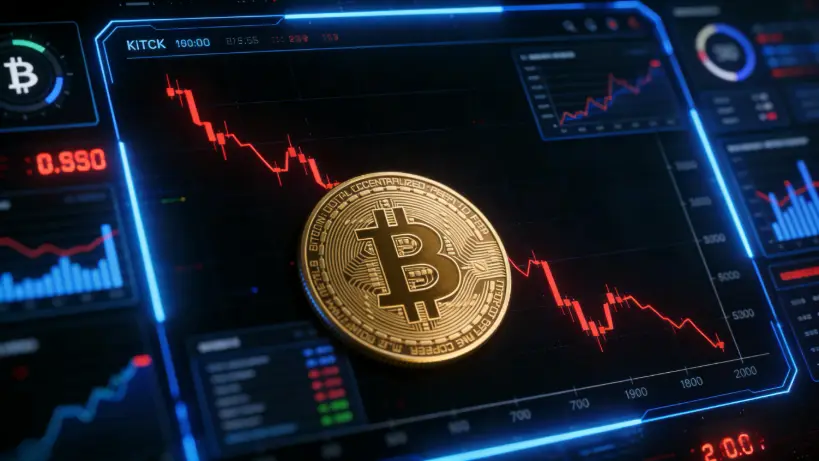
Bitcoin has fallen despite the Federal Reserve’s interest rate cuts—a move that should benefit risk assets, leaving many investors confused. Theoretically, loose monetary policy lowers borrowing costs, boosts investment and supports risk assets, yet Bitcoin’s decline proves a single rate cut cannot sustain rallies in highly speculative markets. In the short term, liquidity conditions, risk sentiment and capital positioning exert a far greater impact on Bitcoin’s price than interest rate adjustments.
Rate Cuts ≠ Liquidity Easing
Markets often mistakenly equate rate cuts with overall liquidity easing. In reality, monetary policy easing takes various forms, and a simple rate cut does not guarantee free capital flow. Central banks remain cautious at present, adjusting their balance sheets and formulating policies dynamically based on economic data. Even with a slight drop in borrowing costs, there has been no massive capital inflow that once drove crypto prices to surge. Bitcoin’s price is highly correlated with excess market liquidity; without sustained capital inflows into risk assets, rate cuts have minimal positive impact on it.

The “Buy the Rumor, Sell the Fact” Dynamic Takes Effect
A key reason for Bitcoin’s decline is that the market had already priced in rate cut expectations ahead of time. Before the Fed adjusted its policy, the positive outlook for rate cuts was fully reflected in Bitcoin’s price, driving an advance rally. When the actual rate cut news was announced, investors chose to take profits rather than enter the market to buy. This dynamic is particularly pronounced in the highly volatile Bitcoin market. Coupled with the prevalence of leveraged trading, a slight price drop triggers forced liquidations, and passive selling further accelerates declines, creating a vicious cycle.
Bitcoin Acts as a Risk Asset, Not a Safe Haven
Debate persists over whether Bitcoin is “digital gold”, yet its recent price action shows it behaves more like a highly volatile risk asset. Fed rate cuts often signal concerns about economic slowdown. In such times, investors’ risk appetite wanes, leading them to sell high-volatility assets like Bitcoin and shift capital to traditional safe havens such as cash, government bonds and precious metals. Additionally, the correlation between crypto assets and tech stocks has strengthened, making Bitcoin’s performance increasingly driven by overall market sentiment. Its long-term value narrative struggles to underpin short-term prices.
Leave a Reply